Research Casestudy
Mixed research methods Planning - User Recruitment
Why did I chose the topic of health industry for solving problems?
By understanding what keeps these fitness enthusiasts engaged and committed, we can identify key elements that contribute to user engagement eventually to user retention
Habit forming gaps in Health care

Identifying the gaps especially in the pool of habit forming apps.
Although there are several existing solutions in this industry, the need for another design arises from diverse needs of users and USABILITY. The present digital solutions may focus on specific aspects hence leaving the gaps for versatile solutions ultimately resulting in better user engagement.
In the realm of user retention, tapping into the unwavering dedication of individuals who have achieved considerable milestones in their fitness journeys is invaluable. Their unique experiences can illuminate strategies for retaining users by harnessing their shared enthusiasm and motivation. By understanding what keeps these fitness enthusiasts engaged and committed, we can identify key elements that contribute to user loyalty and long-term usage.
User recrutiment
Why these users?
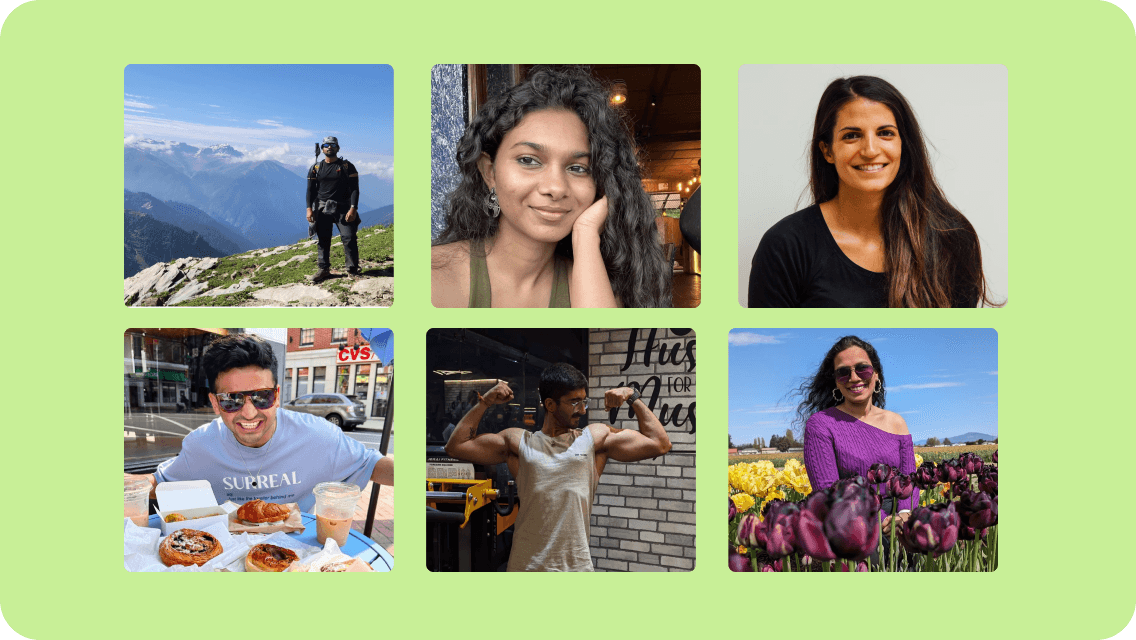
To identify gaps in habit formation and routine building, I strategically recruited users who have maintained long-term consistency in their fitness journeys. This included nutritionists, goal-oriented individuals, and those who have demonstrated sustained commitment to fitness. I conducted six immersive contextual interviews with these dedicated users, which surfaced numerous critical insights that couldn’t be overlooked. While I conducted only one contextual interview with a nutritionist, industry standards (as outlined by NN/g) indicate that six in-depth interviews are sufficient to uncover key behavioral patterns and pain points.
Contextual enquiry
Contextual Enquiry
Inspire Design by observing and interviewing users in their Context.

Why Contextual Interview?
Uncovering behavioral nudges and user motivations requires in-depth, immersive interviews with the right users. While contextual inquiry helps reveal real-world behaviors and environmental influences, it may not fully uncover internal motivations or decision-making rationales. This is where deep-dive user interviews become crucial, allowing us to explore the underlying psychological drivers behind habit formation and engagement.
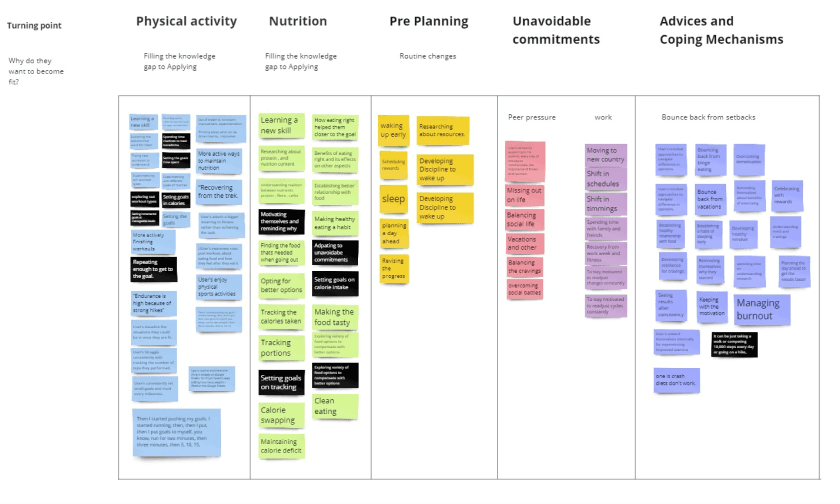
Themes and codes
codes
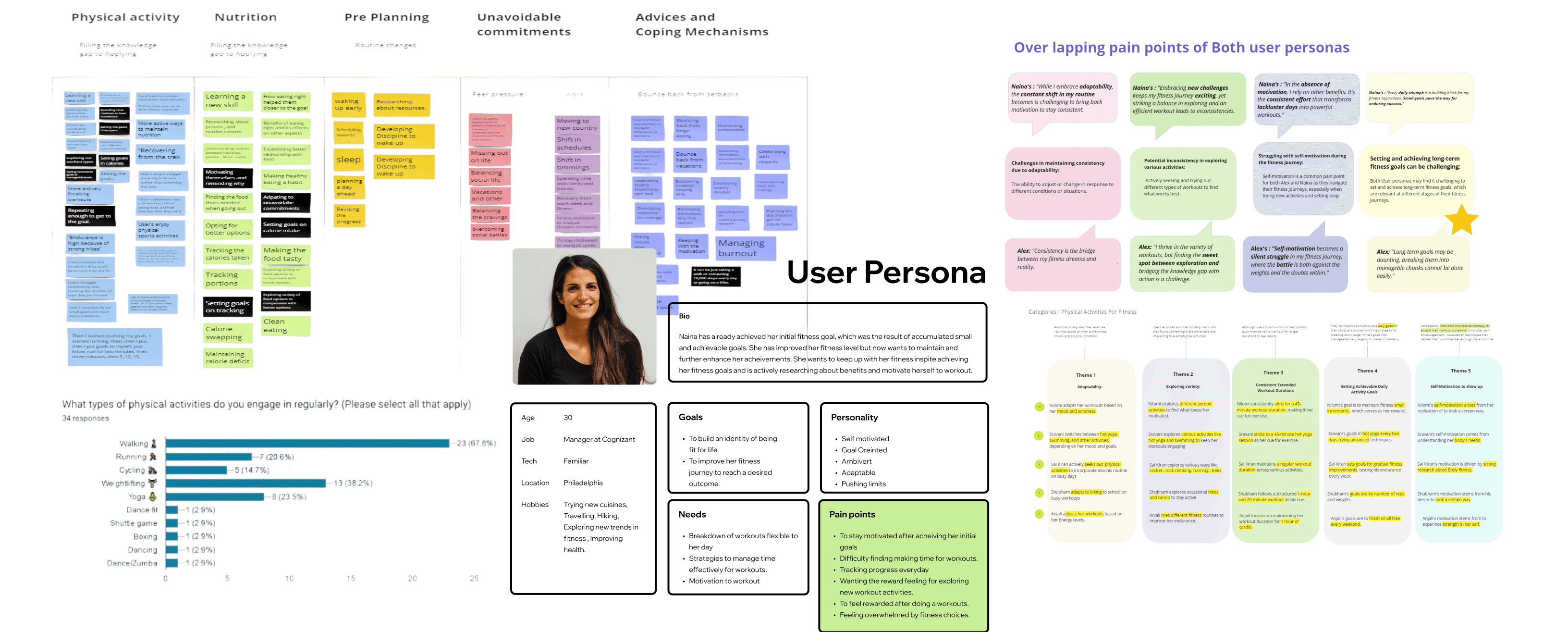
write about indiviual pain points
The app will have the access to heath data , irrespective of their fitness stage , hence making incremental recommendations for users based on their history. The plot twist is , user is engaged in a game that is recommended, making it a more fullfilling and rewarding experience.
themes
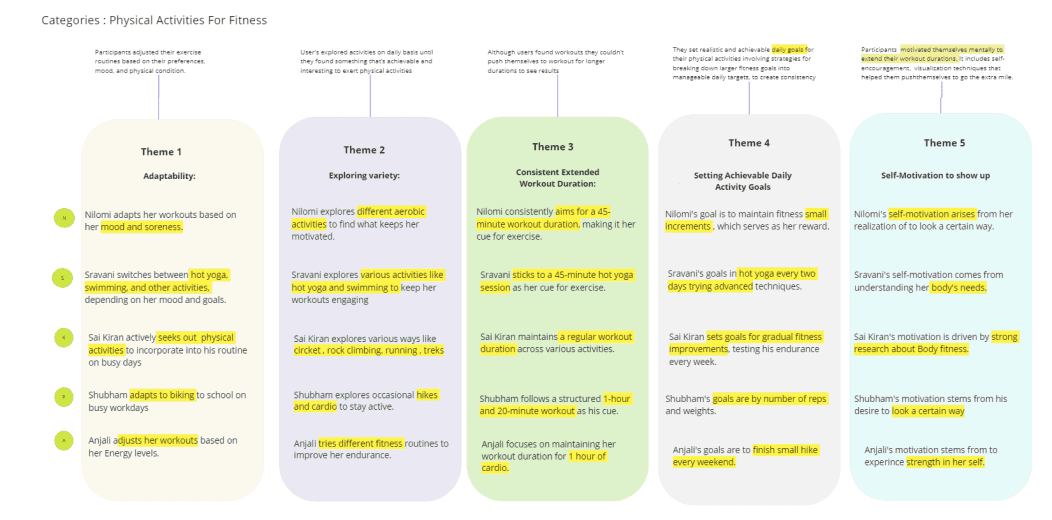
write about indiviual pain points
Gamefication Framework
Progress Bars: While it provides a visual representation of progress (extrinsic), the sense of accomplishment it brings can also be intrinsic.
Avatars or Characters: While customizing avatars is intrinsically enjoyable, characters can also serve as external representations of achievements.
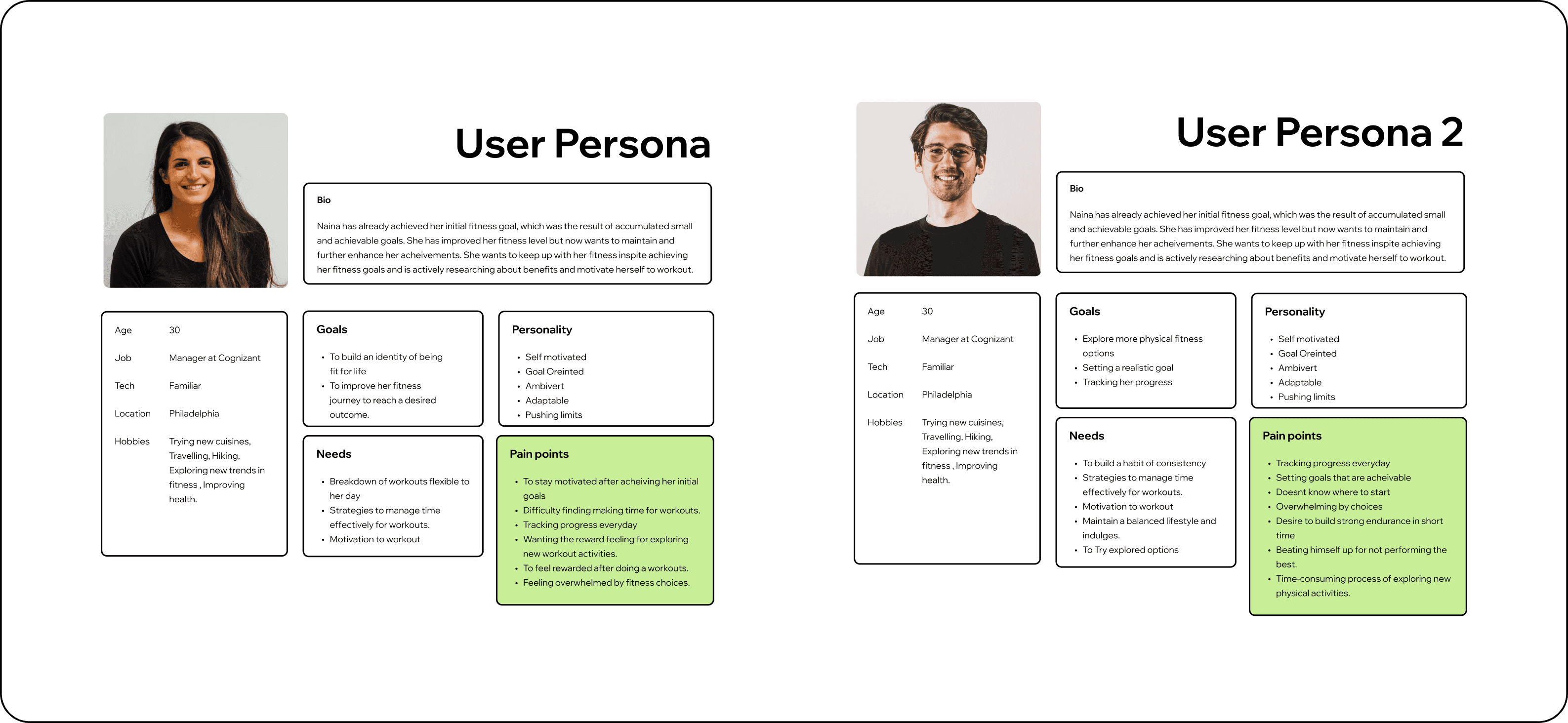
User Persona
Quotes
Kiran
“After COVID, I hit the gym first time. Then I, that is when I took stands that, you know, I need to start into getting fit, get into fitness.”
Read More
Anjali
"I keep reminding myself why I started working out, it's a very anxious process but the results are worth it"
Read More
Sravani
" Staying consistent in walking is easy , I wish activities are just as rewarding as walking"
Read More

Shubham
"Because of unavoidable commitments, designing a flexible workout is really tough, you end up breking consistency"
Read More
Zee
" It's difficult to hit consistency when you like different workouts to beat boredom in routines."
Read More
Nilomi
"After reaching the initial phase it's really hard to stay motivated and then reminding myself other benefits of fitness keeps me going"
Read More
Mvp derivation
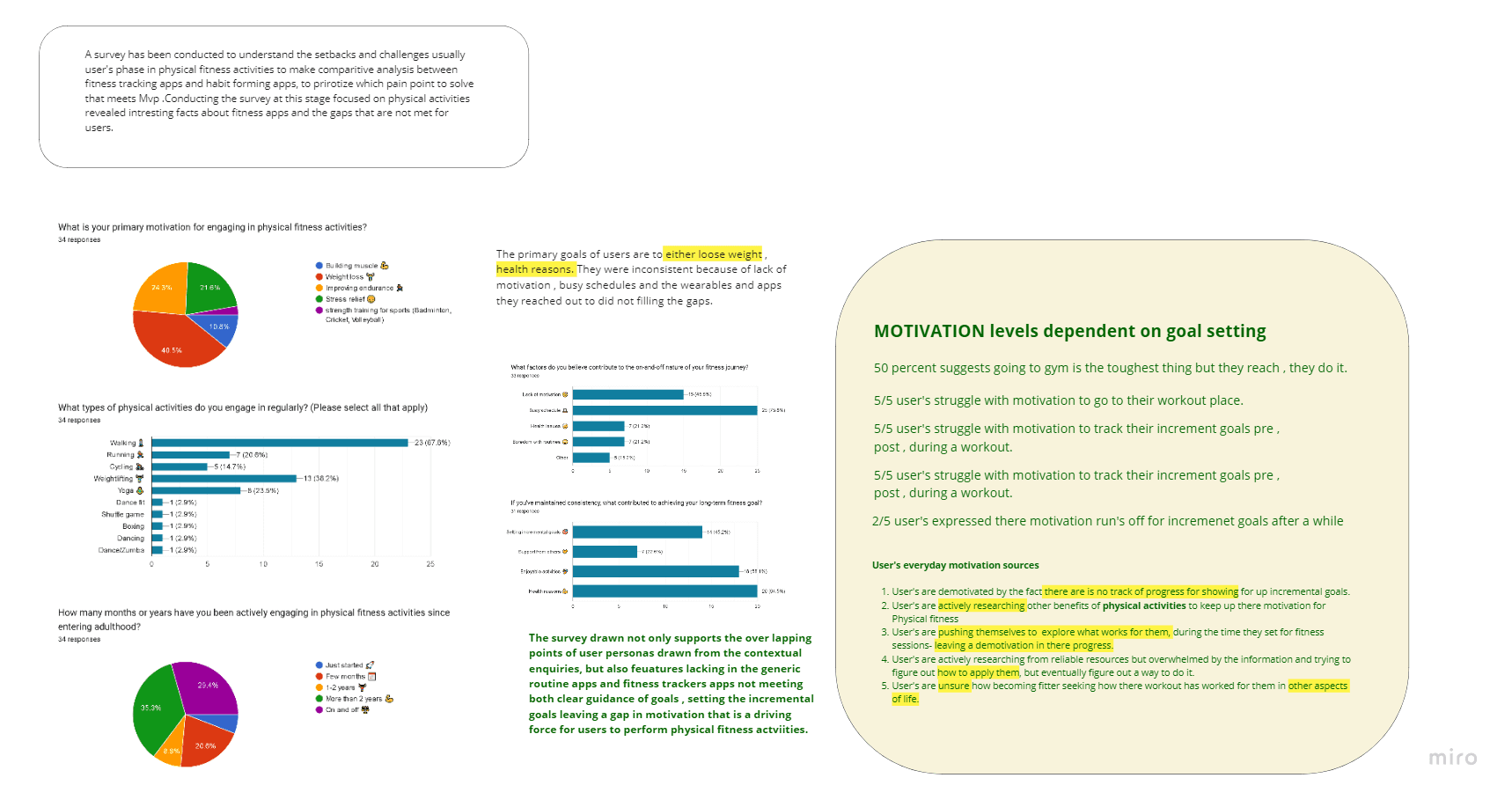
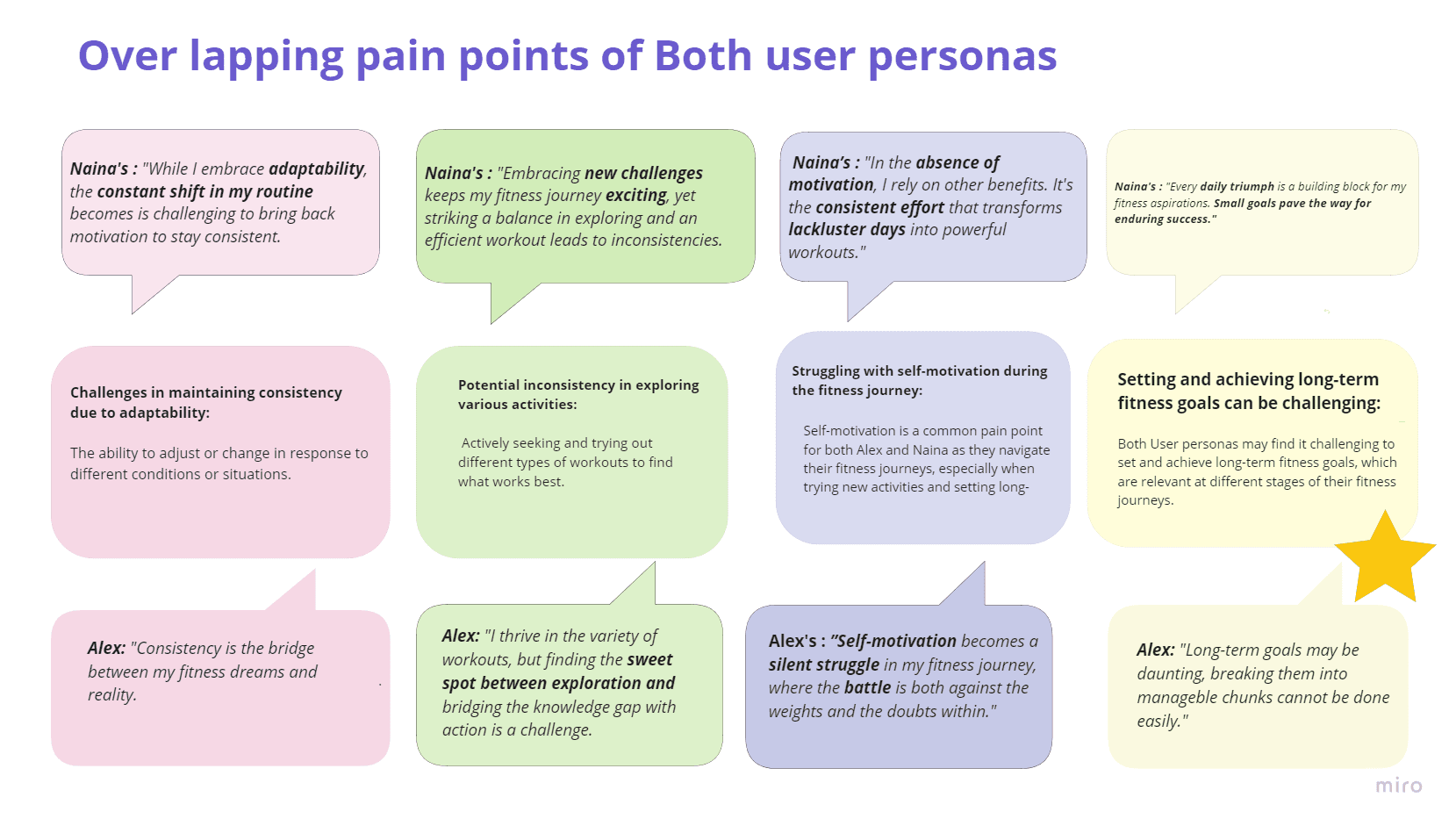
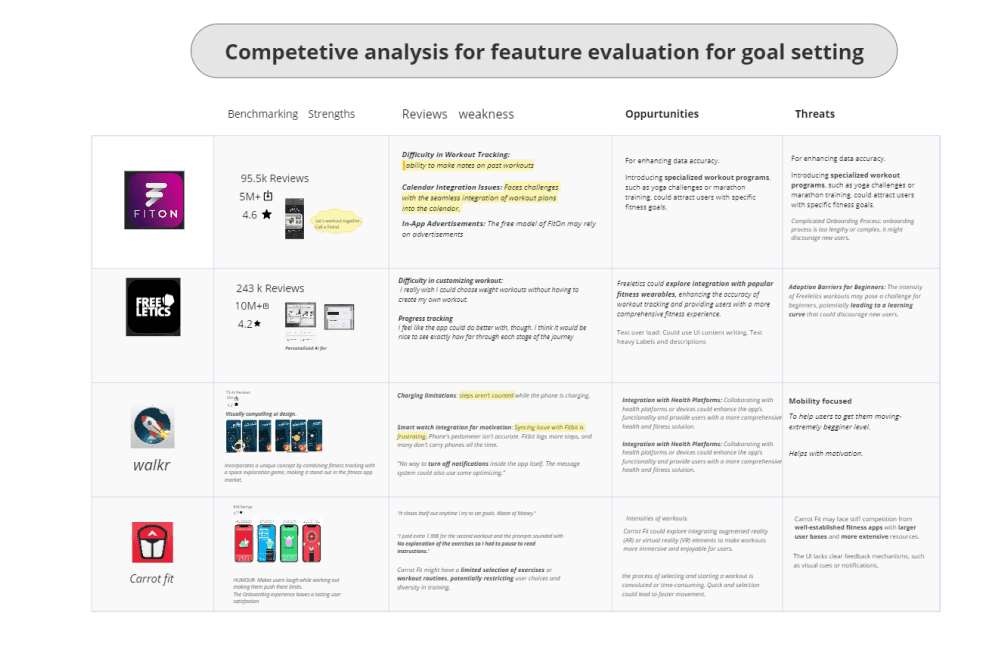
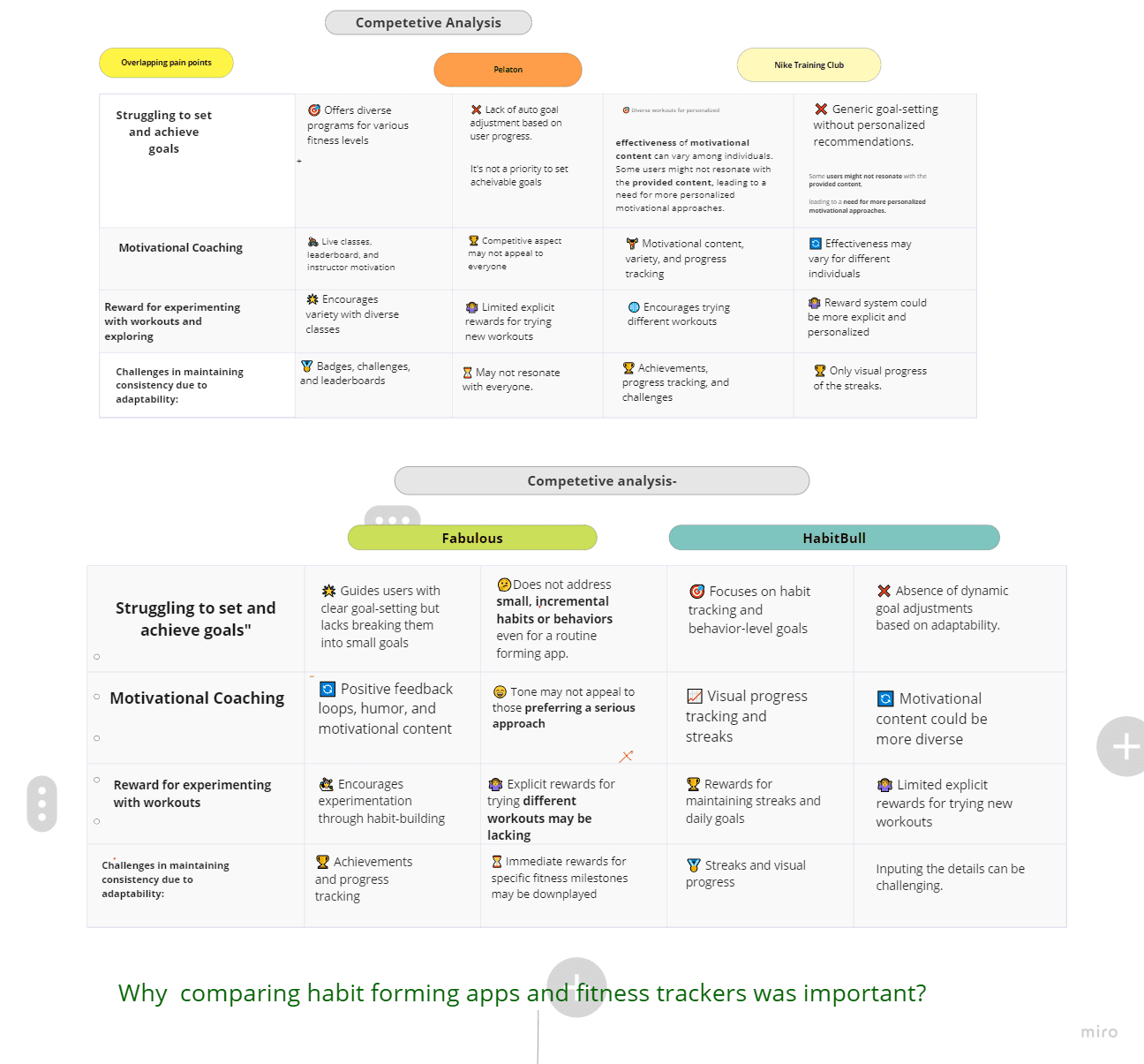
The existing problem lies in the absence of a comprehensive platform that considers individual fitness stages, adapts goals based on previous performance, and assists users in making informed decisions about their daily workouts seamlesly. Addressing this gap is crucial to fostering sustained motivation and progress among fitness enthusiasts, ultimately contributing to a more effective and fulfilling fitness journey.
"If I had an hour to solve a problem, I'd spend 55 minutes thinking about the problem and 5 minutes thinking about solutions.” Albert Einstein
Problem statement
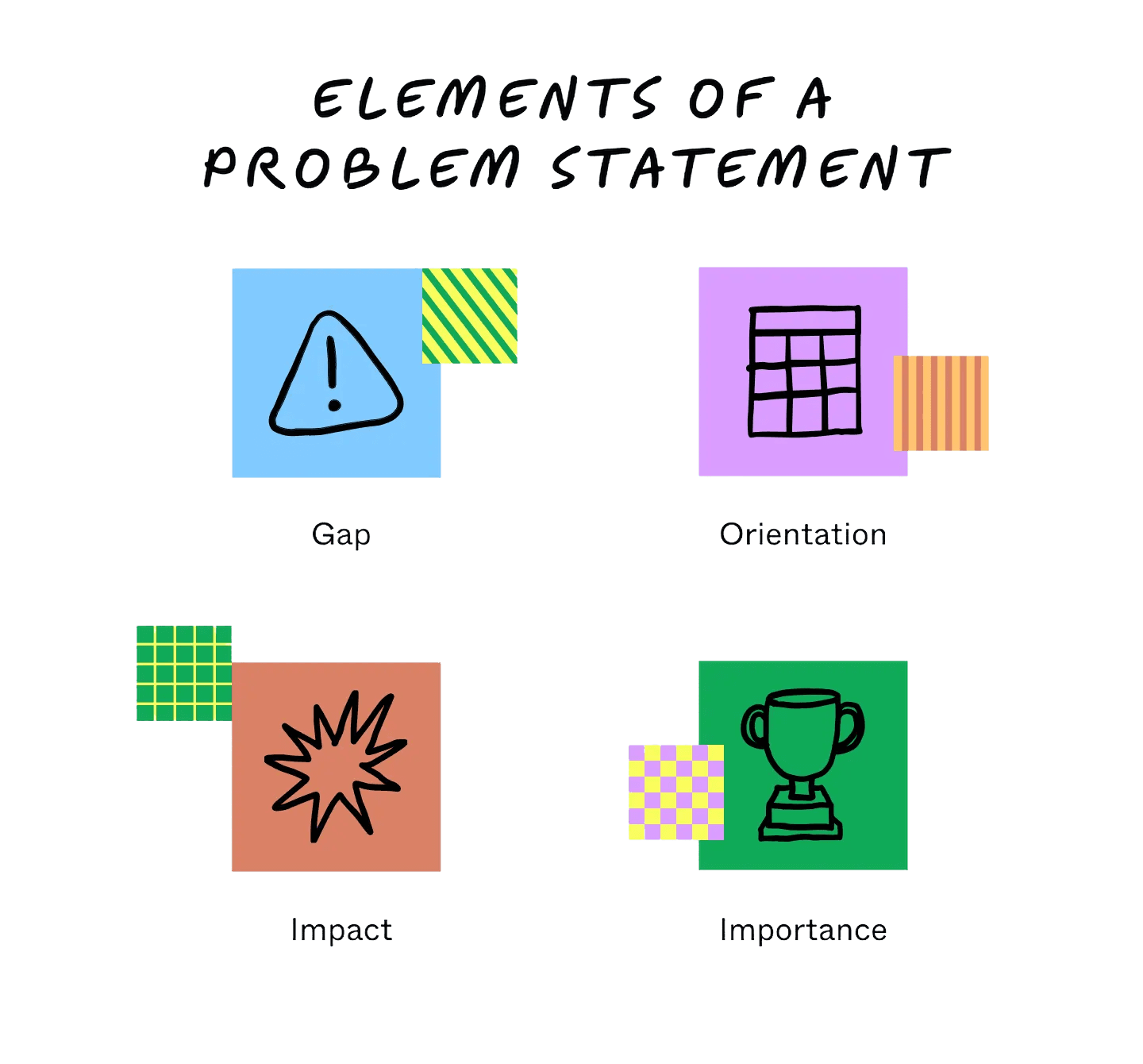
Consistency in physical fitness routines is hindered by a lack of motivation, especially on days when users face challenges like boredom, time constraints, or a general lack of enthusiasm. A significant portion (67%) struggles with tailoring personalized incremental goals on these challenging days, making it difficult to stay committed to their primary fitness objectives and stages. Reminding themselves of initial motivations becomes a task, and tracking progress amid distractions feels daunting. Addressing these challenges is crucial for enhancing user adherence to their fitness journeys.
User research method
"So, if we think about the role of design, it means that most of the times we intentionally build products that are not meant to be fun to use, we’re not designing towards a serious experience for users, we’re actually designing towards a boring one. And true, it might be a usable and efficient experience, but that doesn’t make it less boring."
Key feautures considered
Key feautures
Health data access
Incremental goals
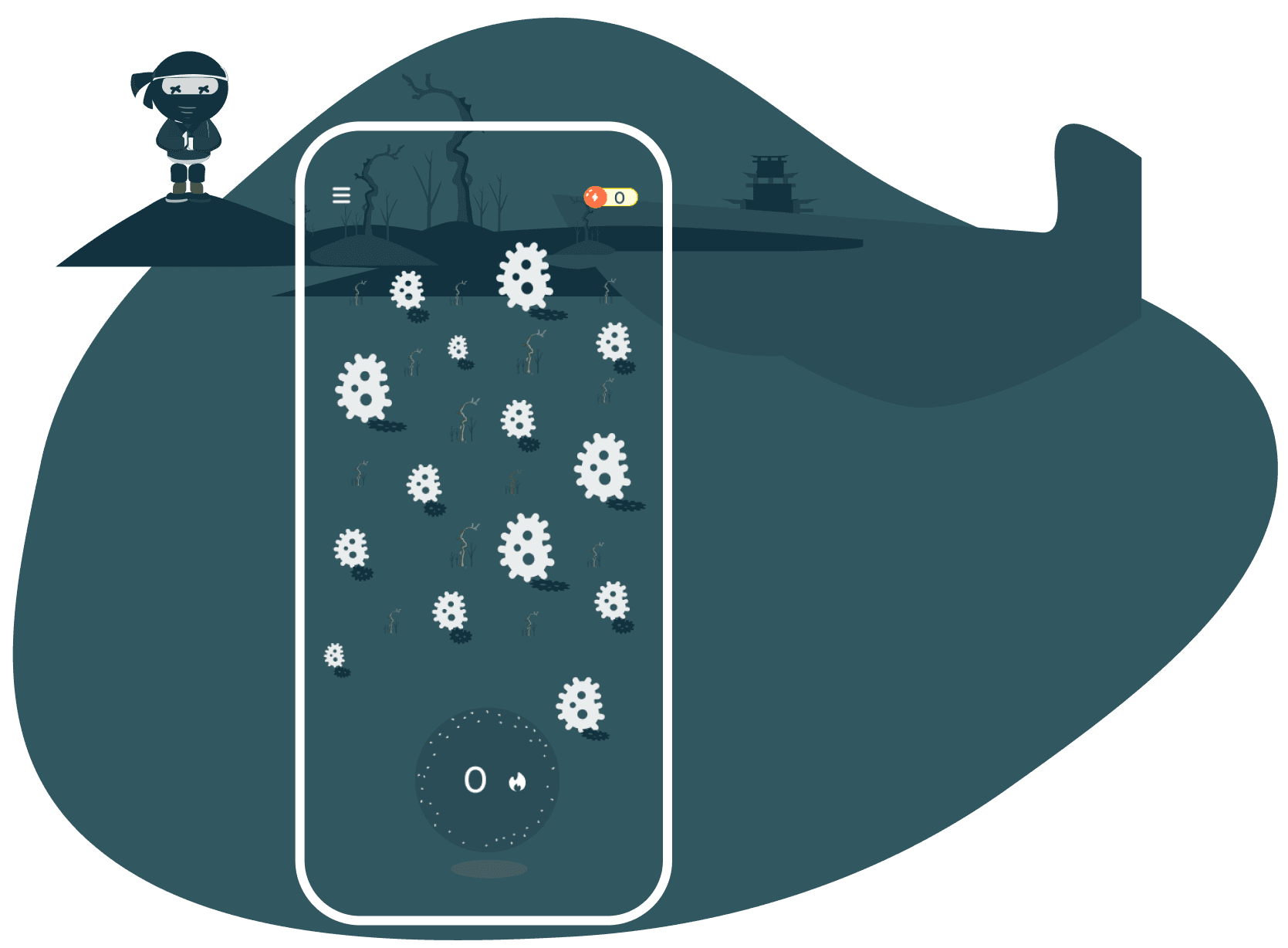
Gameful elements
Rewards system
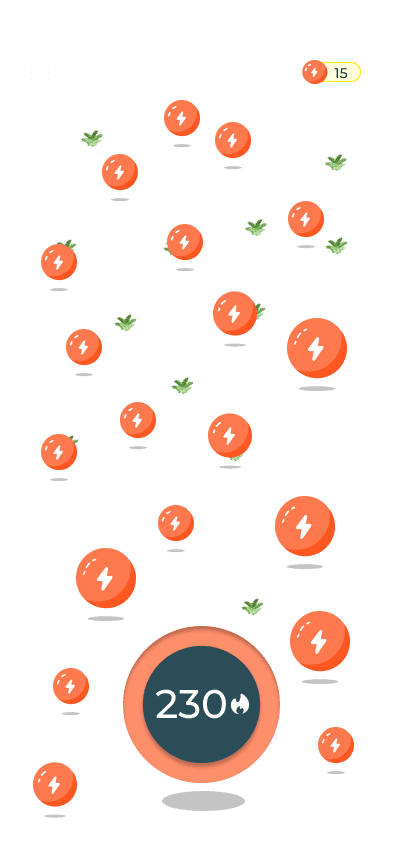
The app will have the access to heath data , irrespective of their fitness stage , hence making incremental recommendations for users based on their history. The plot twist is , user is engaged in a game that is recommended, making it a more fullfilling and rewarding experience.
User recrutiment
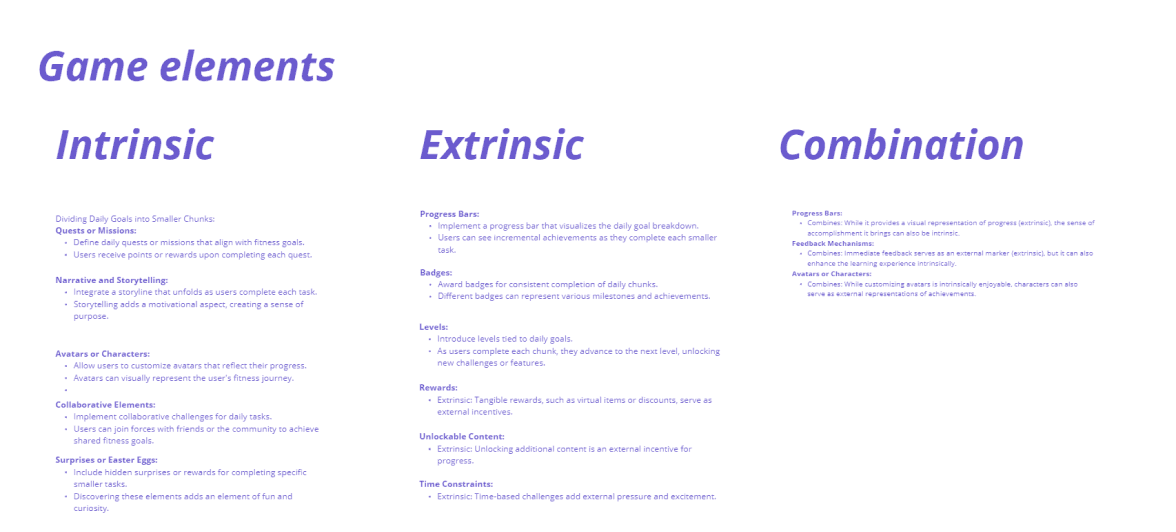
Make an infographic of gameficiation elements
Gamefication Framework
Progress Bars: While it provides a visual representation of progress (extrinsic), the sense of accomplishment it brings can also be intrinsic.
Avatars or Characters: While customizing avatars is intrinsically enjoyable, characters can also serve as external representations of achievements.
concept ideation
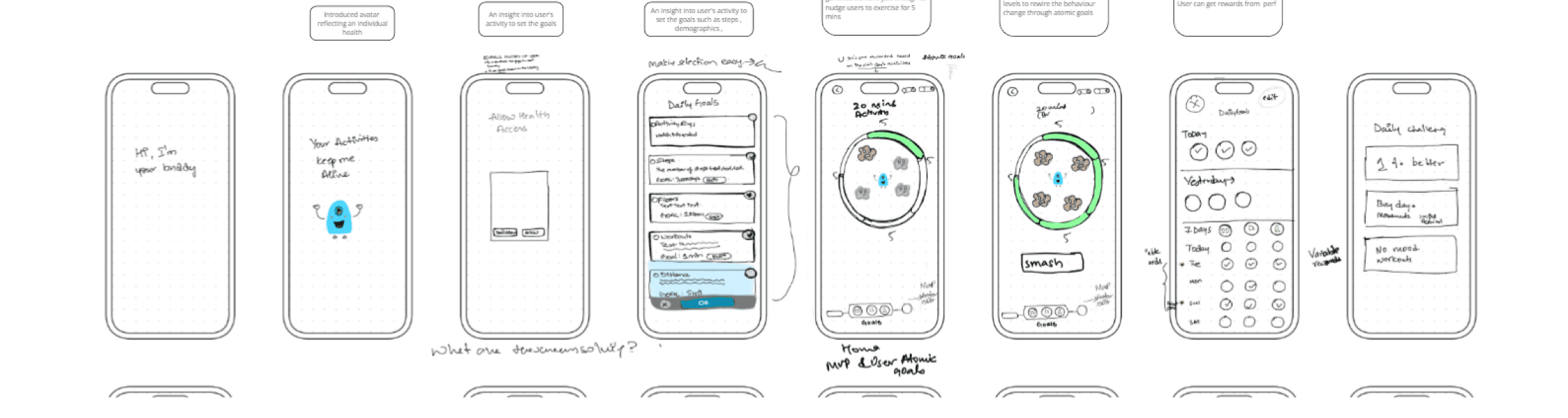
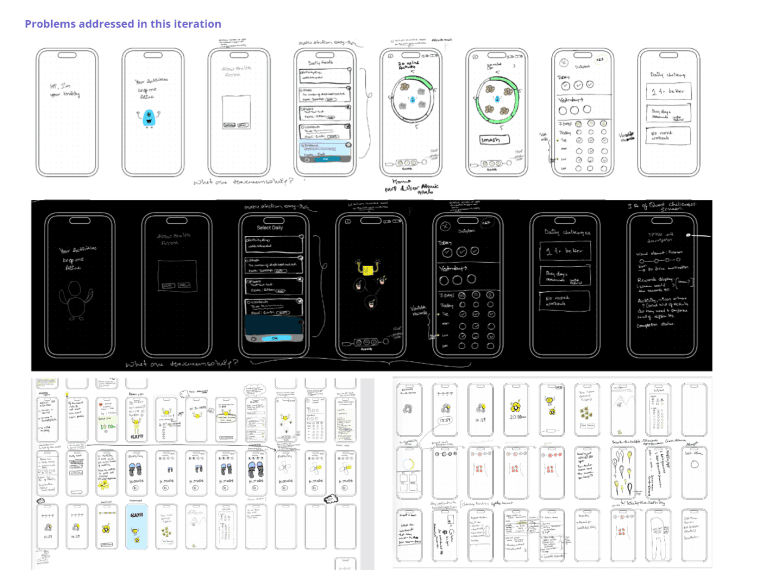
Brain stromming session can be one of the most fun , explorative, activities any designer could do instead of opting for tweaks in design. I was iterating some methods that could use habit forming elements and the octalysis framework. Although multiple ideas have been iterated , some really had the potential to develop into wireframes and more.
View figma prototype
Next projects